
Fire Mitigation Services
Enhance wildfire resilience and regulatory compliance by utilizing drone technology to efficiently establish and maintain low-flammability vegetation along powerline corridors, rights-of-way, and designated fire breaks.

1. Corridor Assessment & Planning
-
Survey Utility Corridors:
Inspect transmission and distribution line corridors to identify high-risk areas, focusing on slopes, access challenges, and existing vegetation density. -
Map Fire Breaks:
Define strategic fire break zones and critical right-of-way segments that require enhanced wildfire mitigation.


2. Seed Mix Selection
-
Low-Flammability Species:
Select “FireWise” grass and ground cover species (flammability rating 8–10) suitable for Colorado rights-of-way—such as blue grama, buffalograss, sheep fescue, perennial ryegrass, and Kentucky bluegrass. -
Site Adaptation:
Adjust seed mixes for varying soil types, sun exposure, moisture, and elevation across the corridor.
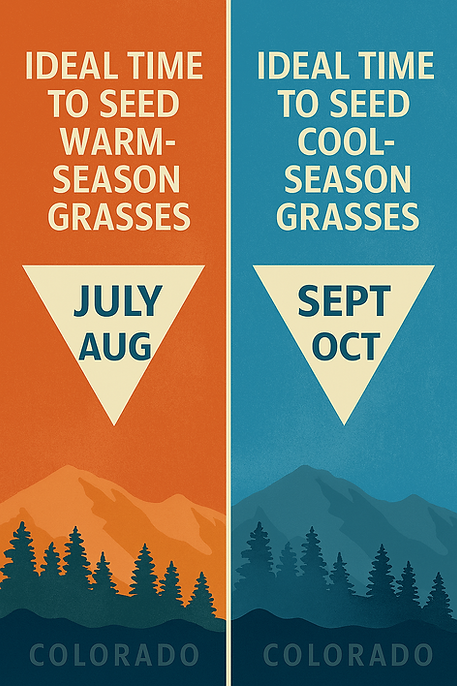
3. Optimal Planting Windows
-
Primary Season:
-
Fall (September–October): Best for large-scale seeding; seeds overwinter and germinate naturally in spring.
-
Spring (March–May): Secondary window if irrigation is available or rapid establishment is needed.
-
-
Weather Requirements:
Schedule drone operations during calm, dry conditions for precise seed placement and minimal drift.


4. Drone Broadcast Seeding Operations
-
Preparation:
-
Coordinate with crews to clear excessive debris or tall vegetation if needed.
-
Divide seed for multi-directional coverage.
-
-
Execution:
-
Deploy drones to broadcast seed evenly along rights-of-way and across fire break zones, flying multiple passes for thorough coverage.
-
For slopes or erosion-prone areas, follow up with drone-applied or manual mulch (clean straw, netting).
-
-
Safety & Documentation:
Maintain safe distances from energized lines; provide GPS-based maps and coverage reports for compliance and recordkeeping.
5. Post-Seeding Maintenance
-
Watering:
Where feasible, arrange light, frequent irrigation until establishment—especially in high-priority or erosion-prone areas. -
Mulching:
Apply mulch to steep slopes or loose soils to aid establishment and reduce erosion. -
Inspection:
Schedule periodic inspections to assess vegetation health and identify areas needing reseeding or additional management.
